Software of Our Own
I built software while holding my newborn.
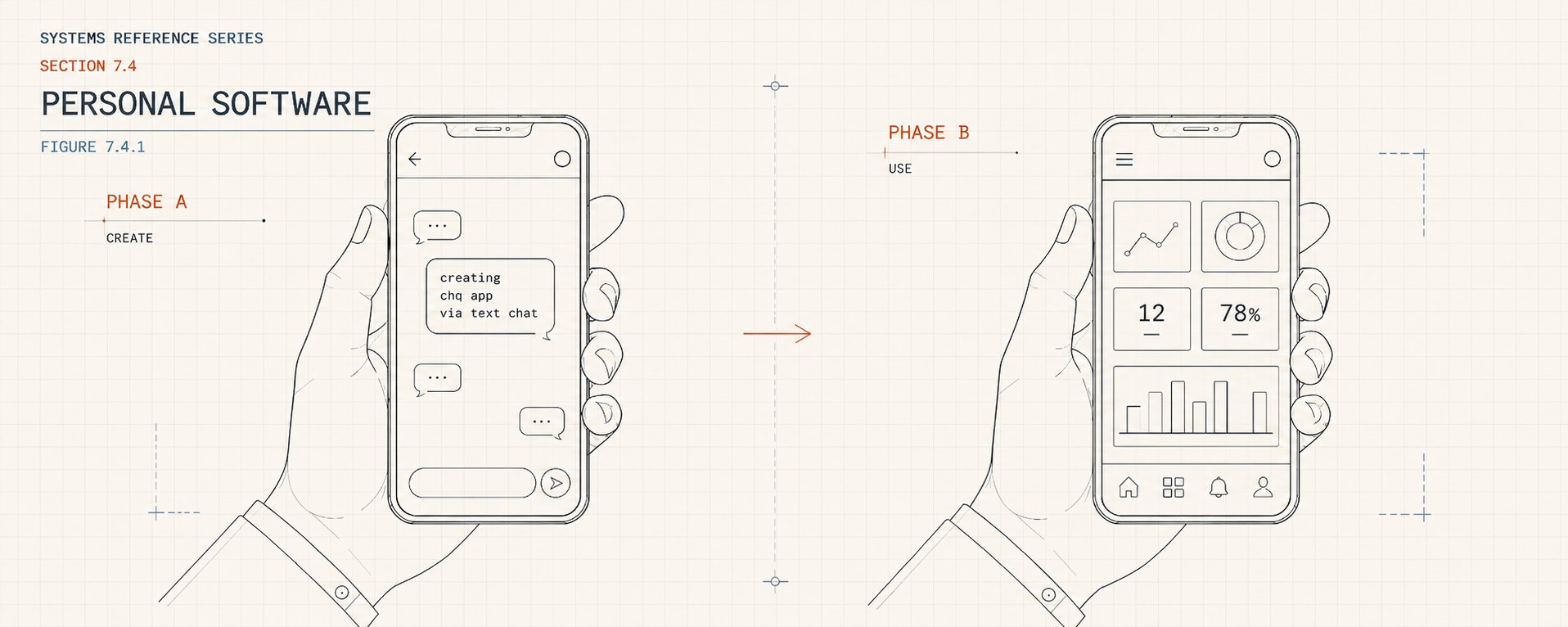
One hand held a sleeping baby. The other held my phone. Over a few weeks of stolen minutes, I built a bespoke household management app my wife and I now run our home on. I built the MVP during one nap; we were using it that afternoon, and when we wanted it to track the baby too, I added new features during a night feed. Built it, used it, changed it, all from the couch. No laptop, no IDE, no team of engineers.
I was astonished at how little of my technical expertise was required. I described what I needed, used what the agent built, and asked for changes. Nothing about that loop belongs exclusively to software engineers.
Soon, the least technical person you know will do the same.
The missing half of the 'personal' computer
We got computers of our own long before we could make the software our own. Software arrived rigid, built for a market and configurable only within boundaries someone else chose.
Spreadsheets were the exception.
Spreadsheets proved people wanted software they could shape themselves. Millions of people who would never call themselves programmers have built budgets, wedding plans, workout logs, and entire small businesses inside them. The spreadsheet found a rare sweet spot: programmable enough to bend to your actual problem, approachable enough that regular people would actually bend it.
Spreadsheets gave people a primitive form of personal software. They let people build for themselves but only within the grid. Building anything else still required learning to code.
You don’t have to read (or write) the code anymore
Five years ago, if you'd told me ordinary people would build and maintain their own software, I would have balked. I'd have said authoring any software requires deep technical knowledge.
Two things changed with the rise of AI coding agents. The first is obvious; the interface became natural language. You describe what you want the way you'd describe it to a person.
The second matters more. For low-stakes software, comprehension is no longer the price of authorship.
Building apps on my phone, I noticed that for a personal tool I didn't need to read the code. I used what the agent built, noticed what was wrong, and asked for the next change.
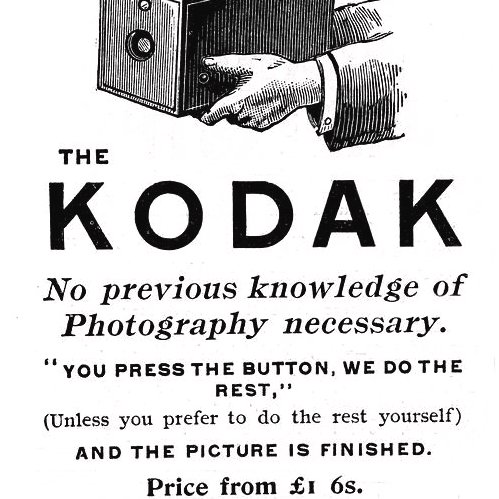
Today, you can make useful software without understanding how it works, the same way a camera lets you make a picture without understanding optics. Kodak said it best in 1888: "You press the button, we do the rest."
That changes when failure costs real money. I build high-stakes software for a living; here deep comprehension remains an absolute requirement. Complex systems intertwined with evolving businesses still demand engineers who understand what is happening underneath.
Personal tools are different. When the scope is small, the behavior is easy to verify, and the cost of failure is low, I can describe what I need, test it, and keep updating it without understanding the implementation.
Software built for someone
Personal software is software built for someone rather than sold to everyone.
Besides the home manager, I built a structured knowledge base for my writing, an app to manage LinkedIn messages without having to look at LinkedIn, a scheduler for my rec league tennis team, and a half dozen other small apps in the cracks of newborn days. All of them fit my use case exactly, because there is no market to fit and no median user to compromise toward.
Five years ago, my home manager app (in full: a combined 1949 Cape Cod home maintenance and newborn tracker) would never have justified my own time, let alone the cost of another engineer. No company will ever build the perfect app my household needs because the total addressable market is one family. That used to mean it never got built.
Now I built it. From my phone, during newborn naps and night feeds.
Software is about to eat the rest of the world
Until now, software mostly reached problems large enough to become markets. Personal software reaches problems too small to become products.
My household's data layer was a kitchen whiteboard and a hope that someone would remember the espresso machine needed descaling. We never addressed this with software before. The problem was too narrow and the cost of building was too high.
The cost of making small software is collapsing. Soon, people who have never thought of themselves as coders will discover the satisfaction of describing a problem and watching their own tool take shape. That experience will spread far beyond tech because nearly everyone has a problem too specific to become a product.
The constraint is shifting from what justifies the cost of software to what people can imagine asking for.
P.S. The apps in this essay run on a small, open, self-hosted framework I built along the way to grow them and keep them alive. It’s called Little Living Apps. Check it out here https://github.com/zakkl13/little-living-apps.